Nigel Cannings – Author

Author | Speaker | AI Expert | Industrial Fellow at University of East London

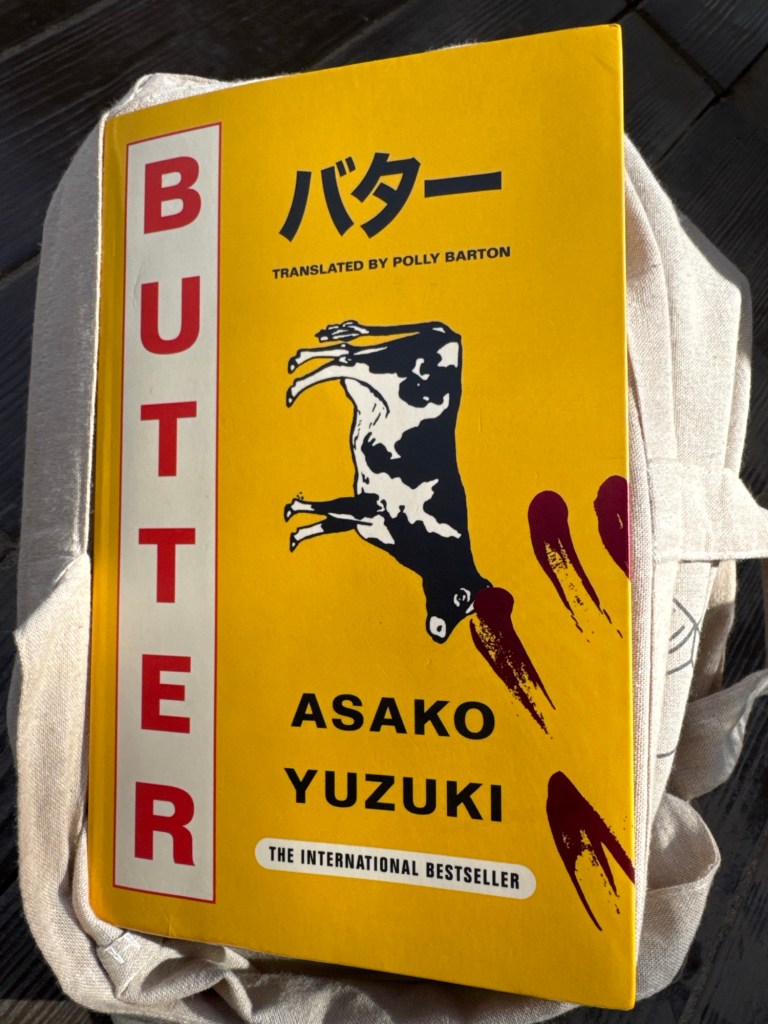
  • The cow is out of the bag!

    Butter by Asako Yuzuki is a novel that defies easy categorization. While its title and the central role of food might suggest a book about Japanese cuisine, this is far from the case. Instead, Yuzuki uses food as a narrative tool, a lens through which the reader is drawn into the emotional lives of the characters. The descriptions of meals and ingredients are so vivid and sensory that you can almost taste the flavors and feel the textures, but these moments serve a much deeper purpose: to explore what it means to connect with others and to understand oneself.

    At its heart, Butter is a story about universal emotions: loss, love, betrayal, and the potential for rebirth. Yuzuki’s writing captures these themes with a sensitivity that resonates deeply, often steering the narrative in surprising directions that challenge the reader’s expectations. This unpredictability is one of the book’s great strengths. Just when you think you understand where the plot is heading, it shifts, revealing a deeper truth about the characters or their relationships.

    One particularly striking element of the novel is how food is woven into the emotional fabric of the story. For example, the act of preparing and sharing meals becomes a way for characters to express feelings they cannot articulate, to comfort one another, or even to manipulate. Food isn’t just sustenance here; it’s a metaphor for connection, vulnerability, and power. Yuzuki’s ability to convey this complexity makes the book feel rich and layered, inviting readers to reflect on their own emotional associations with food.

    Without a deep understanding of Japanese mores it can be hard to fully comprehend the strictures that face the characters, although you can infer many of them from the narrative, particularly the enormous pressure placed on Japanese women to conform to a stereotype that is largely fading in the West, although our focus on body image is one that is clearly universal .

    Ultimately, Butter is not about recipes or the art of cooking but about the intricacies of human relationships and the ways we navigate life’s highs and lows. It’s a beautifully written novel that leaves a lasting impression, and its focus on the unexpected twists in both life and storytelling makes it a compelling read. For those who enjoy character-driven narratives with emotional depth and complexity, this book is a must-read.

    Rating: 10/10

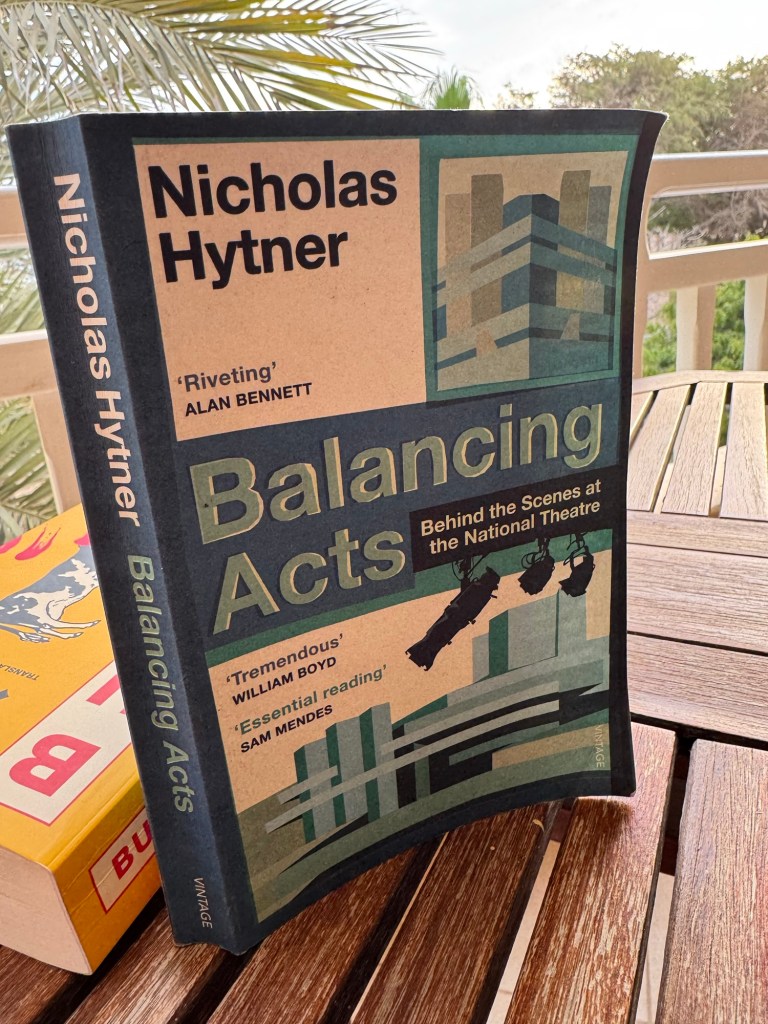
  • Nicholas Hytner’s Balancing Acts is an engaging and entertaining exploration of his time at the helm of the National Theatre, offering a fascinating reflection on what makes this institution such a cornerstone of British cultural life. Hytner shares behind-the-scenes anecdotes and his insights into the creative process, weaving together a narrative that is both personal and deeply connected to the wider world of theatre.

    While the book occasionally gets a bit bogged down in Hytner’s love of Shakespeare—perhaps more detail here than some might need—it remains a thoroughly enjoyable read. Theatre lovers will especially relish the glimpses into the early careers of now-famous actors like Anna Maxwell-Martin and Ben Whishaw, as well as Hytner’s musings on the challenges and triumphs of staging productions that speak to a diverse and evolving audience.

    The most compelling thread, however, is the story that links Hytner back to Oscar Wilde through John Gielgud, a tale that encapsulates the rich history and interconnectedness of British theatre. But for the full story, you’ll have to pick up the book yourself.

    A must-read for theatre enthusiasts and anyone interested in the cultural pulse of modern Britain.

    Rating: 9/10

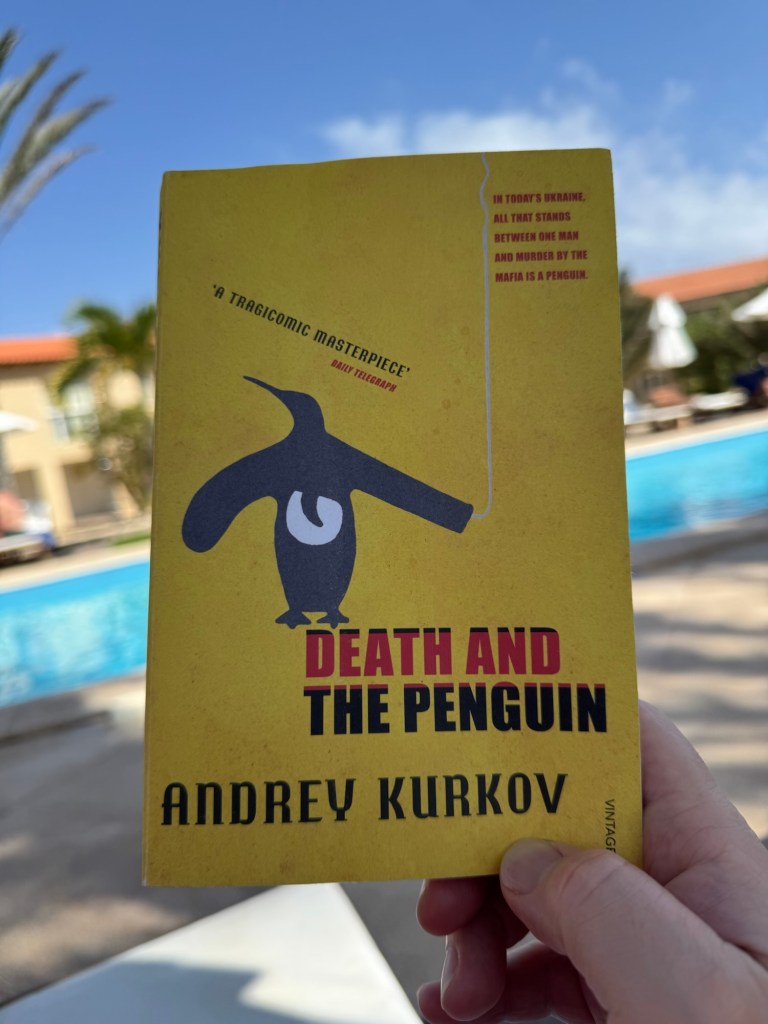
  • Andrey Kurkov’s Death and the Penguin is a superb blend of absurdity and melancholy, a novel that cleverly captures the surrealism of post-Soviet life through the unlikeliest of companions: a writer named Viktor and his pet penguin, Misha. The absurdist tone is reminiscent of Luigi Pirandello’s works, with its focus on the fragile boundary between reality and farce, and the quiet despair of navigating a world teetering on chaos. It is particularly interesting to read of a Kiev so removed from the one currently under attack by the same forces it has just escaped in the book.

    The genius of the novel lies in Kurkov’s use of the penguin. Misha is not merely a quirky plot device but a poignant symbol of Viktor’s own alienation and quiet resignation. The penguin’s silent presence amplifies the emotional weight of Viktor’s struggle, be it his morally ambiguous work writing obituaries for the living, or his uneasy entanglement in a sinister underworld. Together, Viktor and Misha embody a unique kind of companionship: one that is deeply lonely, yet strangely tender.

    Kurkov’s prose is deceptively simple, allowing the absurdity to emerge organically. The grim humour, often Kafkaesque, balances the existential dread that pervades the story. As Viktor drifts through a labyrinth of danger and absurdity, readers are left to ponder the cost of survival in a society devoid of stability, trust, or meaning.

    In Death and the Penguin, Kurkov has crafted a work that is both deeply personal and universally resonant. The novel lingers in the mind long after its final page, a testament to its ability to be both absurd and achingly human at once.

    Rating: 9/10

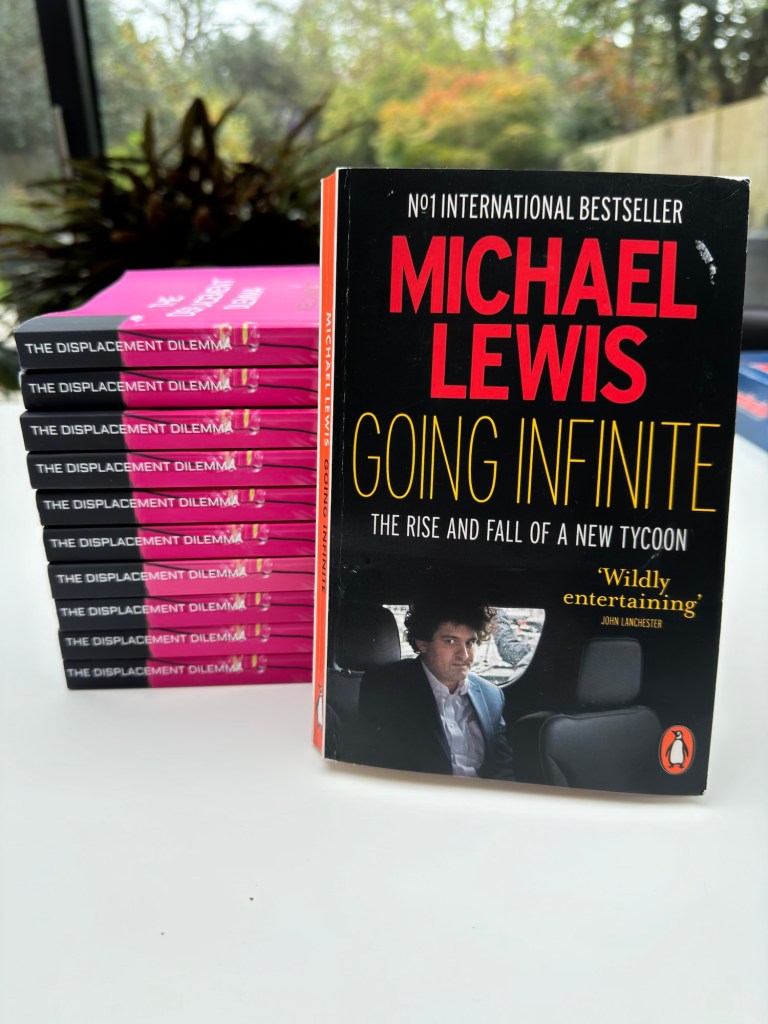
  • Michael Lewis has long been celebrated for his ability to transform complex financial narratives into gripping, accessible stories. His works, such as “Liar’s Poker,” “The Big Short,” and “Flash Boys,” have set a high standard in financial journalism. In “Going Infinite: The Rise and Fall of a New Tycoon,” Lewis turns his attention to the meteoric ascent and dramatic collapse of Sam Bankman-Fried, the founder of the cryptocurrency exchange FTX.

    “Going Infinite” chronicles Bankman-Fried’s journey from a promising MIT graduate to a billionaire crypto magnate, and ultimately, to a figure embroiled in one of the most significant financial scandals of recent times. Lewis delves into Bankman-Fried’s early career at Jane Street Capital, his venture into the world of cryptocurrencies with Alameda Research, and the rapid growth of FTX. The narrative captures the shady allure of the crypto boom and the subsequent unraveling of FTX, leading to its bankruptcy and Bankman-Fried’s legal troubles.

    Lewis’s storytelling prowess is evident as he navigates the intricate world of cryptocurrencies, making it comprehensible and engaging for readers. He provides insights into Bankman-Fried’s personality such as his unconventional demeanour, commitment to “effective altruism”, and the chaotic management style that characterised his enterprises. The book offers a window into the high-stakes environment of crypto trading and the ethical ambiguities that often accompany rapid financial success.

    However, “Going Infinite” has faced criticism for its portrayal of Bankman-Fried. Some reviewers argue that Lewis’s close access to his subject may have led to a narrative that is overly sympathetic, potentially overlooking red flags and failing to critically assess the actions leading to FTX’s downfall. The New York Times noted that Lewis appeared “stubbornly credulous,” suggesting that his intimate access resulted in a “front-row seat—from which he could apparently see nothing.” – Perhaps a little unfair, given that it was not Lewis’ job to modify Bankman-Fried’s behaviour (and what we see in the book suggests that would not have been possible anyway), but to observe.

    Despite these critiques, “Going Infinite” is a compelling read, especially for those interested in the volatile world of cryptocurrencies and the personalities that drive it. He brings out the very human stories behind the crypto boom, and how a small number of people, with very different motivations, came together and provided the fuel for a market that continues to grow, and cause controversy, today.

    Lewis’s ability to weave a narrative that reads like a thriller remains intact, providing readers with a gripping look at a complex financial saga. While it may not reach the investigative depths of “The Big Short,” it offers a timely exploration of ambition, innovation, and the perils of unchecked growth in the digital age. This is something that happened just a few, short years ago, and reminds us that regulators and regulation are hopelessly ill-equipped to handle the fast moving world of Fintech (and how some regulators can end up being mislead by the very people they are supposed to be regulating)

    For readers who have appreciated Lewis’s previous works, “Going Infinite” adds another layer to his exploration of financial markets and the characters that shape them. It serves as a reminder of the thin line between visionary innovation and reckless hubris, a theme that resonates across his body of work. It is not his best work, but nonetheless, a gripping read

    Rating: 9/10

    Amazon UK

  • I am delighted to announce the publication of my first book “The Displacement Dilemma”.

    Expertise is hard won. It takes years of training to master law, accountancy, medicine, or in fact any discipline. You don’t walk into any job and become good at it on day one. You work hard, master your craft, get promoted, get better paid. It is one of the fundamental tenets of modern employment.

    But that expertise was gained by doing lots of the jobs no-one else wanted to do. I started life as a lawyer, and I reviewed a lot of very boring documents, and wrote a lot of boring summaries, and went to a lot of boring meetings, and did a lot of very boring photocopying. But, after all of that, I became a pretty passable lawyer.

    And then I moved into technology, and started the whole process all over again, teaching myself to program, learning how to read academic papers, and at the same time work out how to run a business.

    AI is changing this right now.

    A whole host of tasks that we used to train humans on are going or gone. Why pay people dollars to do something when a machine can do it for cents? As the technology gets better, the problem becomes worse.

    In the book, I explore this “Displacement Dilemma”, and look at some of the ways we might be able to overcome it, if we move quickly. I also draw on my knowledge of AI and the industry that surrounds it, to look at some of the practical and ethical questions that AI brings up. Can a computer “own” something it creates? And does anyone own anything if the data the AI has been trained on has been “stolen”?

    A number of people have accused me of scaremongering, of giving into the hype that surrounds AI. I am not. I have had an inside view on this industry since before it was an industry in its current form. I making GPU cards do things they weren’t designed to do before words like “inferencing” has been invented.

    AI, in the form we see today, is like nothing the world has seen before. It really is coming for your job, in fact your whole industry, so buckle up and see how we ride out the Displacement Dilemma.