Andrey Kurkov’s Death and the Penguin is a superb blend of absurdity and melancholy, a novel that cleverly captures the surrealism of post-Soviet life through the unlikeliest of companions: a writer named Viktor and his pet penguin, Misha. The absurdist tone is reminiscent of Luigi Pirandello’s works, with its focus on the fragile boundary between reality and farce, and the quiet despair of navigating a world teetering on chaos. It is particularly interesting to read of a Kiev so removed from the one currently under attack by the same forces it has just escaped in the book.
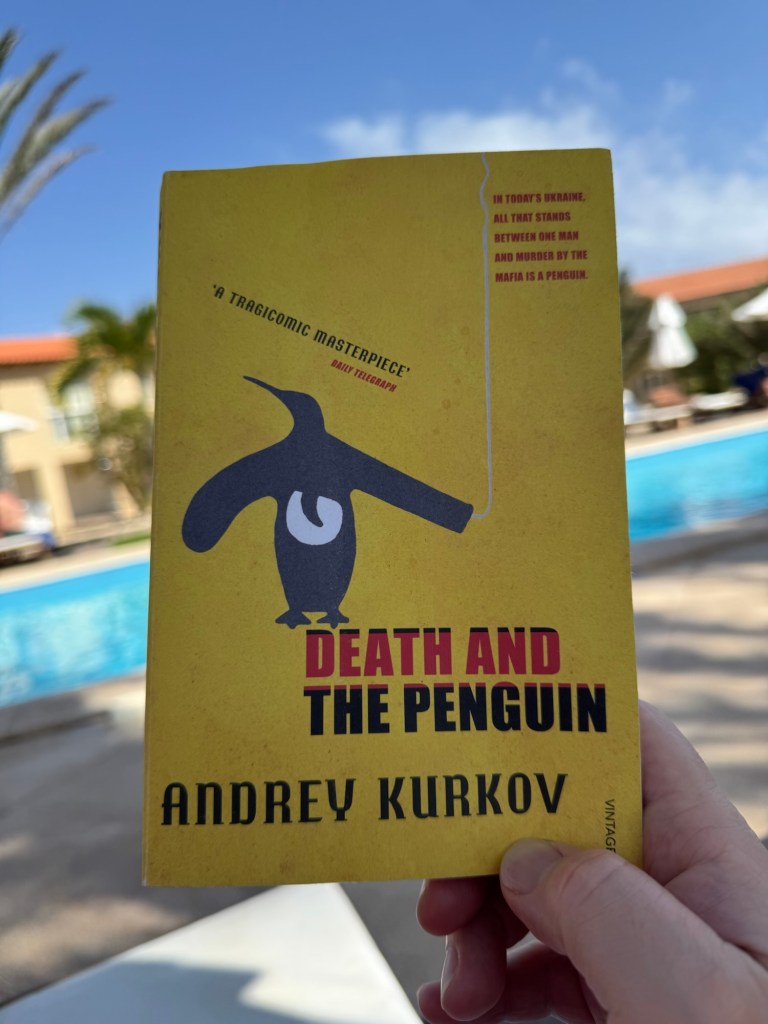
The genius of the novel lies in Kurkov’s use of the penguin. Misha is not merely a quirky plot device but a poignant symbol of Viktor’s own alienation and quiet resignation. The penguin’s silent presence amplifies the emotional weight of Viktor’s struggle, be it his morally ambiguous work writing obituaries for the living, or his uneasy entanglement in a sinister underworld. Together, Viktor and Misha embody a unique kind of companionship: one that is deeply lonely, yet strangely tender.
Kurkov’s prose is deceptively simple, allowing the absurdity to emerge organically. The grim humour, often Kafkaesque, balances the existential dread that pervades the story. As Viktor drifts through a labyrinth of danger and absurdity, readers are left to ponder the cost of survival in a society devoid of stability, trust, or meaning.
In Death and the Penguin, Kurkov has crafted a work that is both deeply personal and universally resonant. The novel lingers in the mind long after its final page, a testament to its ability to be both absurd and achingly human at once.
Rating: 9/10

 Nigel Cannings - Author
Leave a comment