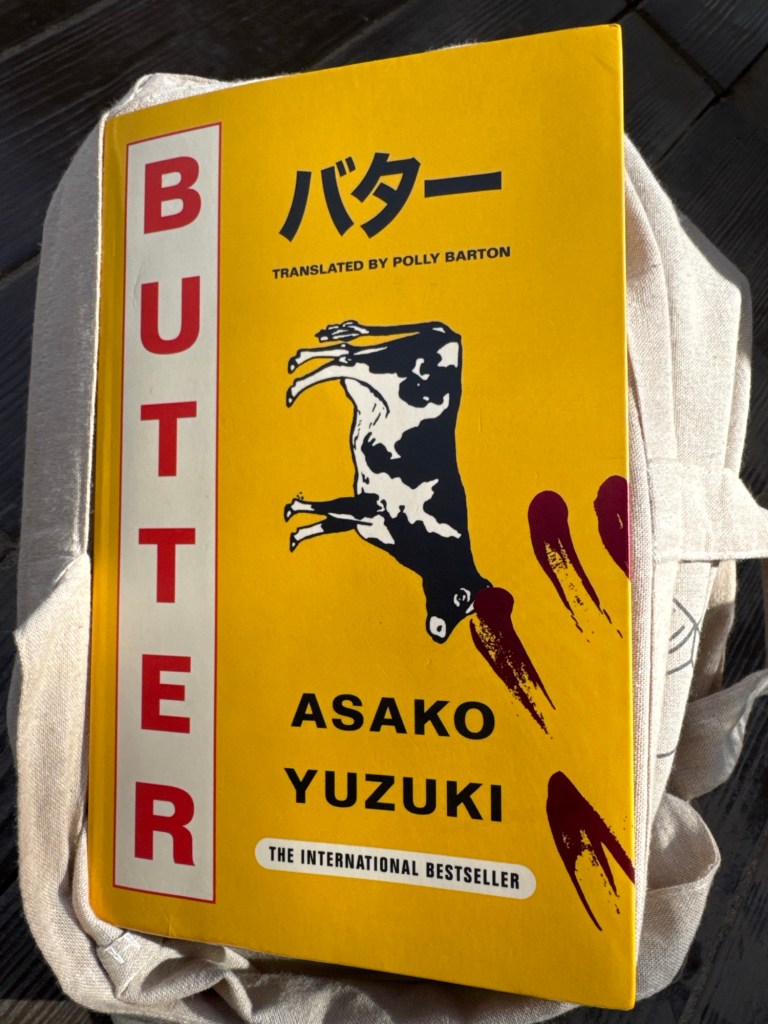
Butter by Asako Yuzuki is a novel that defies easy categorization. While its title and the central role of food might suggest a book about Japanese cuisine, this is far from the case. Instead, Yuzuki uses food as a narrative tool, a lens through which the reader is drawn into the emotional lives of the characters. The descriptions of meals and ingredients are so vivid and sensory that you can almost taste the flavors and feel the textures, but these moments serve a much deeper purpose: to explore what it means to connect with others and to understand oneself.
At its heart, Butter is a story about universal emotions: loss, love, betrayal, and the potential for rebirth. Yuzuki’s writing captures these themes with a sensitivity that resonates deeply, often steering the narrative in surprising directions that challenge the reader’s expectations. This unpredictability is one of the book’s great strengths. Just when you think you understand where the plot is heading, it shifts, revealing a deeper truth about the characters or their relationships.
One particularly striking element of the novel is how food is woven into the emotional fabric of the story. For example, the act of preparing and sharing meals becomes a way for characters to express feelings they cannot articulate, to comfort one another, or even to manipulate. Food isn’t just sustenance here; it’s a metaphor for connection, vulnerability, and power. Yuzuki’s ability to convey this complexity makes the book feel rich and layered, inviting readers to reflect on their own emotional associations with food.
Without a deep understanding of Japanese mores it can be hard to fully comprehend the strictures that face the characters, although you can infer many of them from the narrative, particularly the enormous pressure placed on Japanese women to conform to a stereotype that is largely fading in the West, although our focus on body image is one that is clearly universal .
Ultimately, Butter is not about recipes or the art of cooking but about the intricacies of human relationships and the ways we navigate life’s highs and lows. It’s a beautifully written novel that leaves a lasting impression, and its focus on the unexpected twists in both life and storytelling makes it a compelling read. For those who enjoy character-driven narratives with emotional depth and complexity, this book is a must-read.
Rating: 10/10


 Nigel Cannings - Author